Plant medicine ceremonies are one of the most powerful — and most misunderstood — elements of the retreat experience. At NutriCove, we take a specific approach: deep respect for the tradition, combined with rigorous clinical safety protocols. Here's how we do it and why it matters.
The Problem with the Current Landscape
The interest in ayahuasca and other plant medicines has exploded in recent years. Unfortunately, so has the number of poorly run ceremonies with inadequate safety measures. Stories of unscreened participants having adverse reactions, untrained facilitators, and ceremonies run in contexts where emergency medical care isn't accessible have created legitimate concern.
On the other end, overly medicalized approaches strip the experience of its spiritual and ceremonial context — reducing a sacred tradition to a pharmaceutical intervention. Neither extreme serves the participant.
Our Approach
NutriCove occupies the middle ground. We honor the ceremonial tradition while implementing clinical safety standards that protect every participant. Here's what that looks like:
Comprehensive Medical Screening. Every guest completes a thorough medical and psychological intake before their retreat. This includes current medications, psychiatric history, cardiovascular health, and any contraindications. Certain medications (particularly SSRIs and MAOIs) are incompatible with ayahuasca, and we screen for these rigorously. If you don't pass the screening, we'll work with you to find alternative ceremonial experiences during the retreat.
Trained, Experienced Facilitators. Our ceremony facilitators have years of experience working with plant medicine in traditional contexts. They are not therapists administering a substance — they are ceremonial leaders holding sacred space. But they work alongside our clinical team.
Clinical Oversight. A licensed clinical therapist is present throughout every ceremony. They don't lead the ceremony — they observe, support, and are available if any participant needs clinical attention. This dual-support model (ceremonial + clinical) is what makes our approach unique.
Controlled Environment. Ceremonies take place at our partner resort in a dedicated ceremonial space. Medical equipment and trained staff are on-site. The setting is intentional, beautiful, and safe.
Integration Support. The ceremony is not the endpoint — integration is. The day after each ceremony, our Guided Transformation Session is specifically designed to help participants process and integrate their experience. This is where the clinical framework adds the most value: helping participants make meaning from their ceremonial experience and connect it to their therapeutic goals.
What to Expect
Ceremonies typically take place on the evening of Day 3 or Day 4 of the retreat, after participants have had several days to settle in, build trust with the group, and begin their therapeutic arc. This timing is intentional — the ceremony lands in the middle of the retreat, creating a natural deepening point.
The ceremony itself lasts 4-6 hours. Facilitators guide participants through the experience with music, chanting, and individual attention. The clinical therapist maintains a quiet, supportive presence throughout.
Not every retreat includes ayahuasca. Other ceremonial options include cacao ceremonies, breathwork journeys, and fire ceremonies. Participation in any ceremony is always optional. No guest is ever pressured to participate in anything they're not comfortable with.
The Thailand Context
Thailand has a unique relationship with plant medicine. While ayahuasca is not part of the traditional Thai healing pharmacopoeia, Thailand's openness to international healing practices and its strong tradition of herbal medicine create a supportive context. Our ceremonies in Thailand integrate elements of Thai spiritual tradition — chanting, offerings, and the blessing of the ceremonial space — while honoring the Amazonian origins of the medicine.
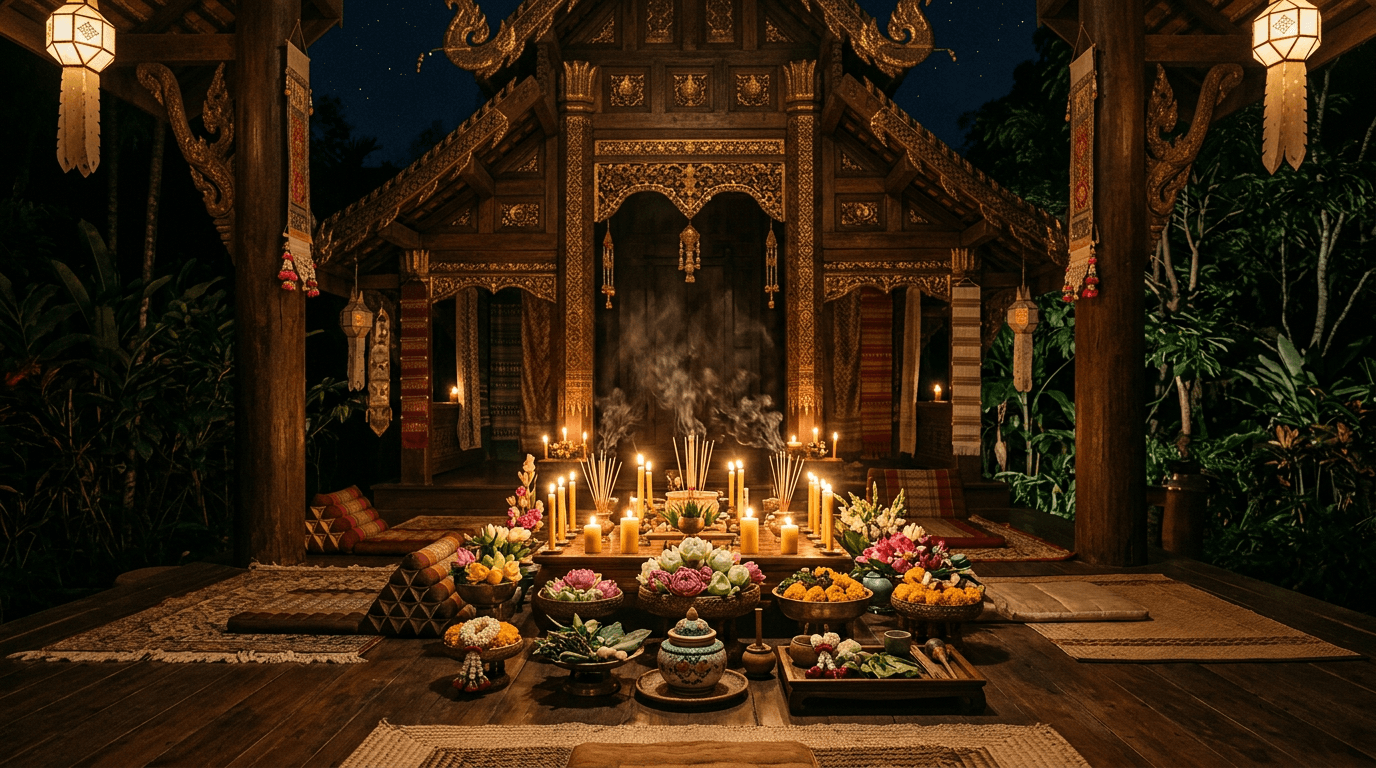
At our Koh Samui location, ceremonies take place in an open-air pavilion overlooking the Gulf of Thailand. The natural setting — ocean sounds, tropical air, starlight — creates a powerful container for the experience.
A Word on Expectations
Plant medicine is not a magic pill. It can facilitate profound insight, emotional release, and spiritual connection — but only within a context that supports integration. The ceremony itself is one evening of a 7-day program. The daily Guided Transformation Sessions, the yoga, the journaling, the group support — these are what turn a single experience into lasting change.
We've seen guests who approach the ceremony with rigid expectations ("this will fix my depression," "I'll have a vision that answers my question") and guests who approach with openness and curiosity. The latter group consistently reports more meaningful, lasting benefits.
Safety Is Non-Negotiable
We cannot overstate this: safety is not an add-on or a nice-to-have. It is the foundation of everything we do. If your medical screening reveals any contraindication, we will not include you in the ceremony. Full stop. There are no exceptions, regardless of prior experience.
This is also why we limit ceremony group size, why we have trained medical staff on-site, and why we spend two days building therapeutic context before the ceremony takes place. Respecting the medicine means respecting the safety protocols that allow it to be experienced responsibly.