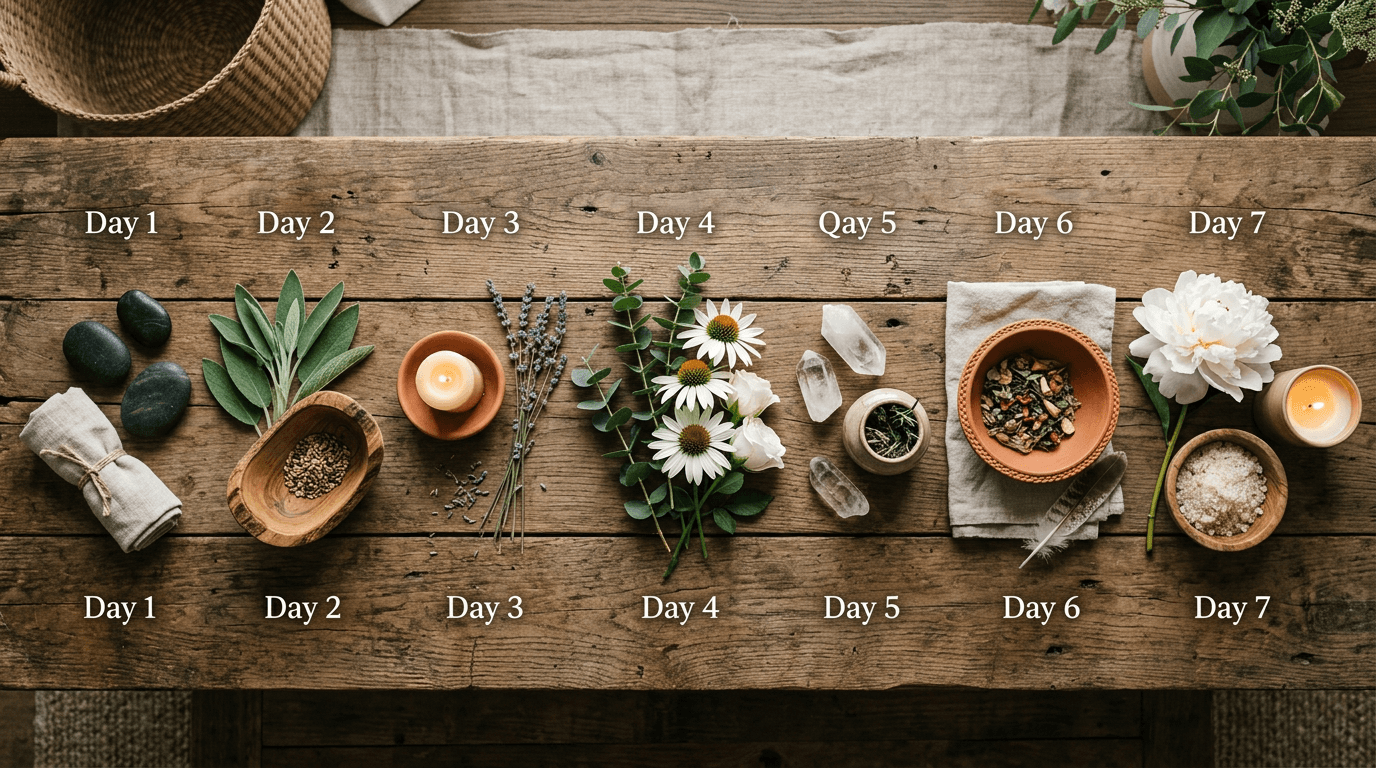
People sometimes ask why our retreats are seven days and five nights instead of a quick weekend. It's not arbitrary. The 7-day duration is based on neuroscience research about how long it takes for meaningful psychological change to begin consolidating.
The Problem with Weekend Retreats
A weekend wellness retreat can feel wonderful. You relax, you unplug, you eat clean food. But by Wednesday, you're back in the same patterns. The relaxation was real but temporary — a pause, not a shift.
This isn't a failure of willpower. It's neuroscience. Your brain needs sustained, repeated input to form new neural pathways. A two-day retreat doesn't provide enough repetition for new patterns to begin solidifying. It's like going to the gym once and expecting visible results.
What Happens Over Seven Days
Research on neuroplasticity — the brain's ability to rewire itself — shows that meaningful pattern change requires:
Sustained removal from triggers. Your daily environment is full of cues that activate existing neural pathways. The commute, the inbox, the kitchen counter — they all trigger habitual thought patterns. Removing yourself from these cues for a full week gives your brain space to form new associations.
Repeated practice of new patterns. Our daily Guided Transformation Sessions aren't one-off workshops. They're sequential, building on each other over seven days. Each session reinforces the neural pathways established in the previous one. By Day 5, guests often report that insights are arising spontaneously — a sign that new patterns are beginning to automate.
Sleep consolidation. Memory and learning consolidate during sleep. Five nights of on-site sleep means five cycles of consolidation, each one strengthening the therapeutic work done during the day. This is one reason we're strict about protecting sleep quality at our retreats — no late-night activities that disrupt recovery.
Emotional processing arc. Psychological research on grief, trauma, and life transitions shows that deep emotional processing follows a predictable arc: resistance, engagement, breakthrough, and integration. This arc typically unfolds over 5-7 days of sustained therapeutic work. Shorter retreats often get stuck in the resistance phase — guests leave just as the real work is about to begin.
The Research
A 2019 study published in Scientific Reports found that a 7-day meditation retreat produced measurable changes in brain connectivity that persisted for at least three months. Participants showed increased connectivity in brain regions associated with emotional regulation and decreased activity in the default mode network (the brain's "autopilot" for rumination and worry).
Separate research on intensive group therapy programs shows that week-long immersions produce therapeutic outcomes comparable to months of weekly sessions. The key factor isn't total hours of therapy — it's the continuity and immersive context.
Why Not Longer?
If seven days is good, wouldn't fourteen be better? Not necessarily. Research on intensive therapeutic programs suggests diminishing returns beyond 7-10 days for most people. The brain needs time to integrate and test new patterns in real-world conditions. Our post-retreat aftercare program is designed to support this integration phase.
There's also a practical consideration: most working professionals can take a week away. Two weeks is significantly harder. We designed the program to be maximally effective within a timeframe that's accessible to the people who need it most.
The NutriCove Difference
Many retreat centers offer programs of various lengths — 3-day, 5-day, 10-day. We made a deliberate decision to standardize at seven days and five nights because it's the minimum effective dose for the kind of change we're facilitating. Combined with daily clinically-guided group therapy, morning and evening practices, ceremony, and the support of a small, theme-matched group, seven days creates conditions for genuine transformation.
This is also why we don't call it a vacation. A vacation is about escape. A retreat is about encounter — encountering yourself, your patterns, and the possibility of change. Seven days gives you enough time to move through resistance, do the work, and begin integrating the results before you return home.
After the Seven Days
The retreat is the catalyst, not the entire process. Integration continues for weeks and months after you leave. Our aftercare program includes follow-up coaching sessions, a digital wellness toolkit, and access to our alumni community. The seven days plant the seeds. The aftercare helps them take root.